Conservancy or National Park? Why Two Safaris With the Same Animals Can Feel So Different
A private conservancy and a national park can look identical in a brochure. Scale, fences, rules and price all shape the experience. Here is how to choose.
We sell safaris in both kinds of places, though most of our Zambia work is in national parks, so we are not neutral. We have tried to write this the way we would explain it across a table: what is true, what depends, and what to ask.
What the words actually mean
A national park is public land set aside and managed by a government wildlife authority. Visitors pay park fees, camps and lodges operate under agreements with the authority, and the rules apply to everyone.
A private conservancy is land held and managed for wildlife by a private owner, a trust or a community. Many began as cattle ranches or grazing land. The owners decide how many beds there can be and what guests may do, and the money from guests pays for the conservation work.
The word is used loosely. Some conservancies are enclosed by a perimeter fence. Others, such as many community conservancies bordering Kenya’s Maasai Mara, are open land leased from Maasai landowners, with limits on bed numbers and vehicles. “Conservancy” tells you who runs the land. It does not tell you whether there is a fence.
Scale and fences
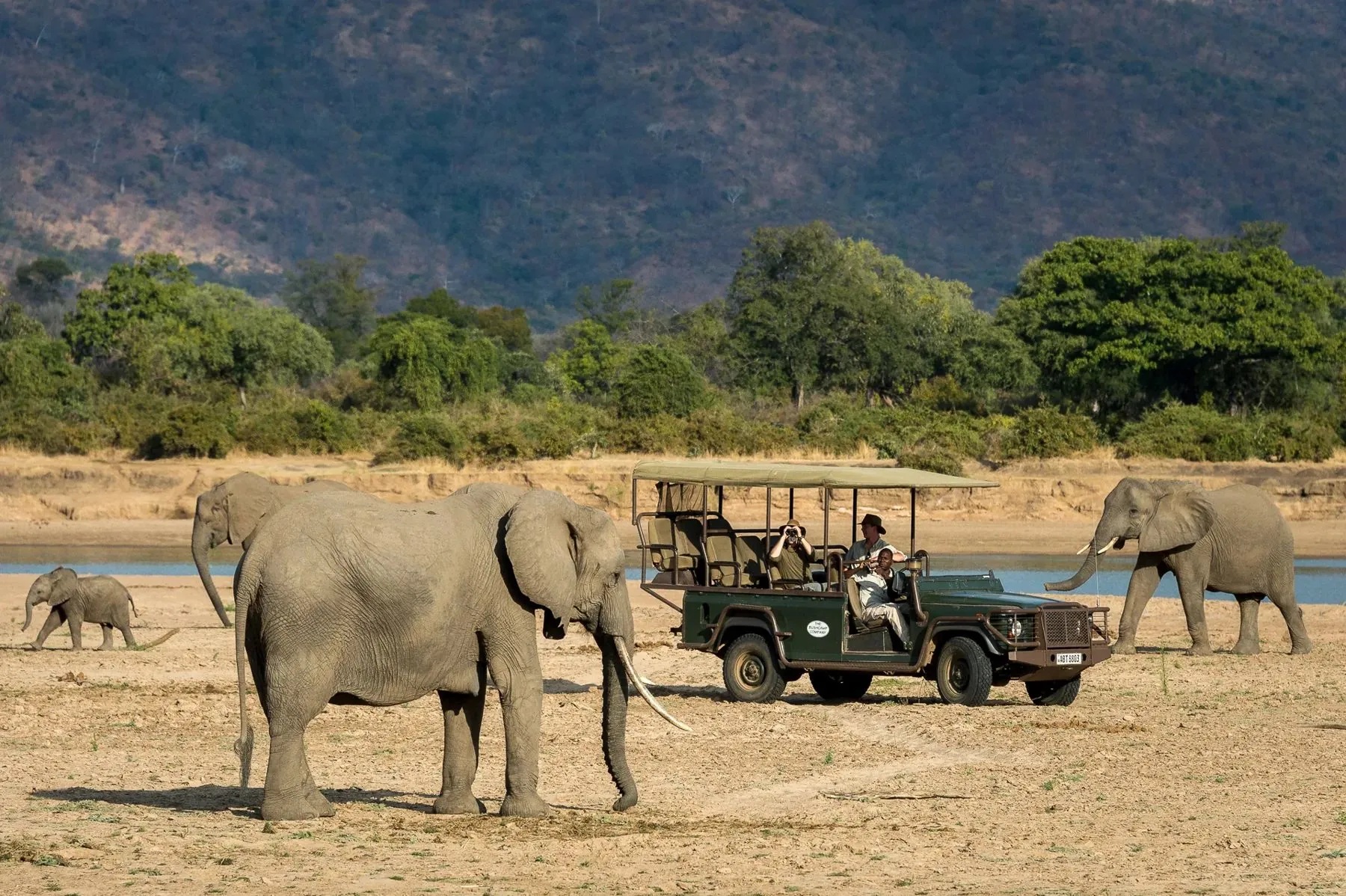
Size is the clearest difference. South Luangwa National Park in Zambia covers about 9,050 square kilometers (roughly 2.2 million acres), and animals move across it, and beyond it, as the river and the seasons dictate.
Kenya’s Lewa Wildlife Conservancy is about 267 square kilometers (some 66,000 acres). It began as a cattle ranch, became a rhino sanctuary in 1983 and was formed as a conservancy in 1995. It is fenced. When the fence between Lewa and its neighbor Borana came down, the two together formed a landscape of about 94,000 acres, still a small area next to a large national park.
A fence is not a flaw. In a part of Kenya with farms, towns and a serious poaching history, a fenced, well-patrolled area is what lets black rhinos live and breed. Borana, for example, received 21 black rhinos in 2013, on land where rhinos had been absent for more than fifty years. It is also true that a managed, fenced area feels different from a landscape that runs on its own terms. A national park such as South Luangwa has no such enclosure, and its wildlife is governed by the river, the rains and the dry season.
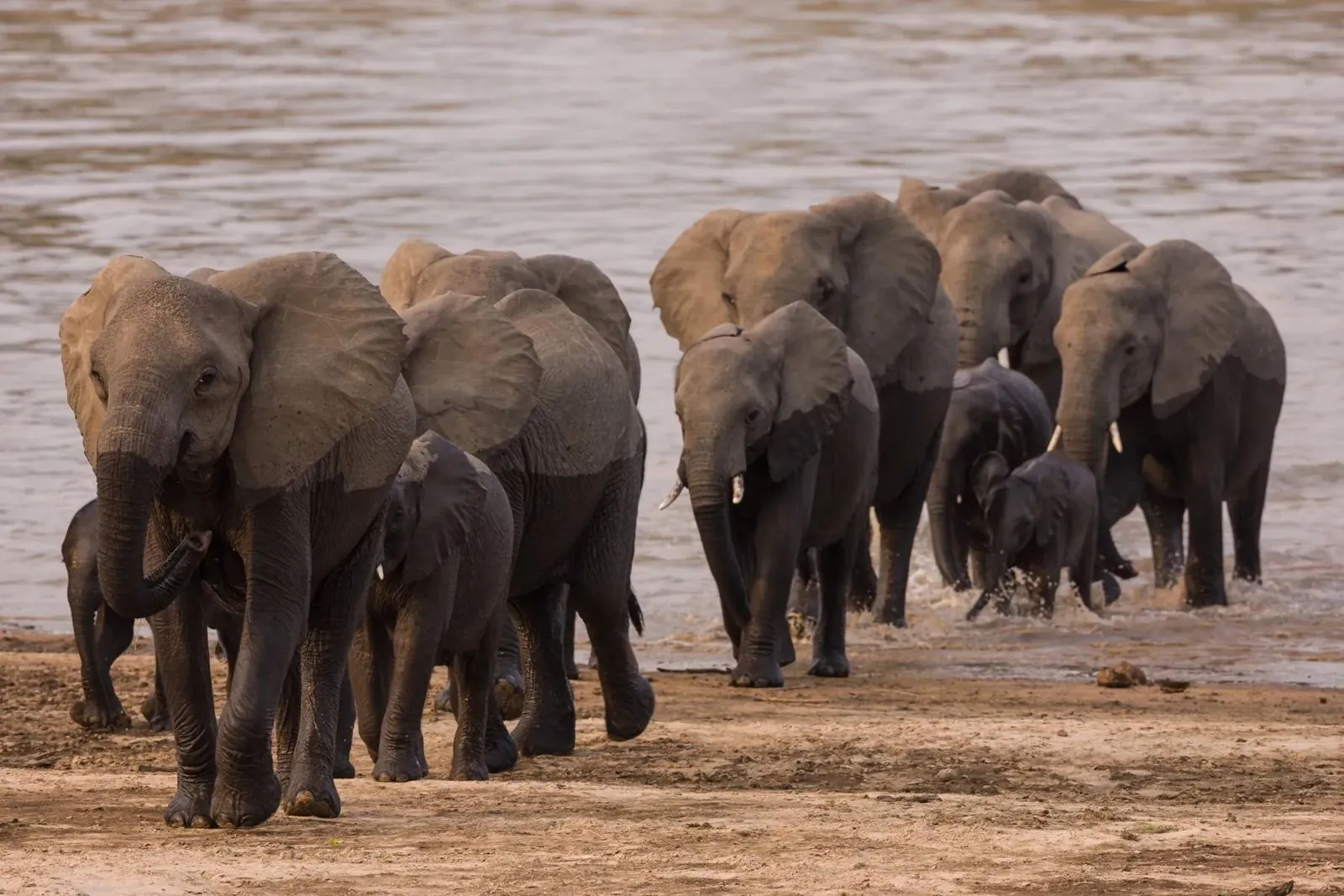
Amboseli National Park in Kenya shows that size is not the whole story. The park itself is only about 392 square kilometers, but it sits inside an ecosystem of roughly 8,000 square kilometers that spans the border with Tanzania, and the land around it is Maasai country. Its famous elephants move well beyond the park boundary.
What you are allowed to do
This is where private land often shines. Because owners cap the number of beds and vehicles, many conservancies allow things national parks generally do not:
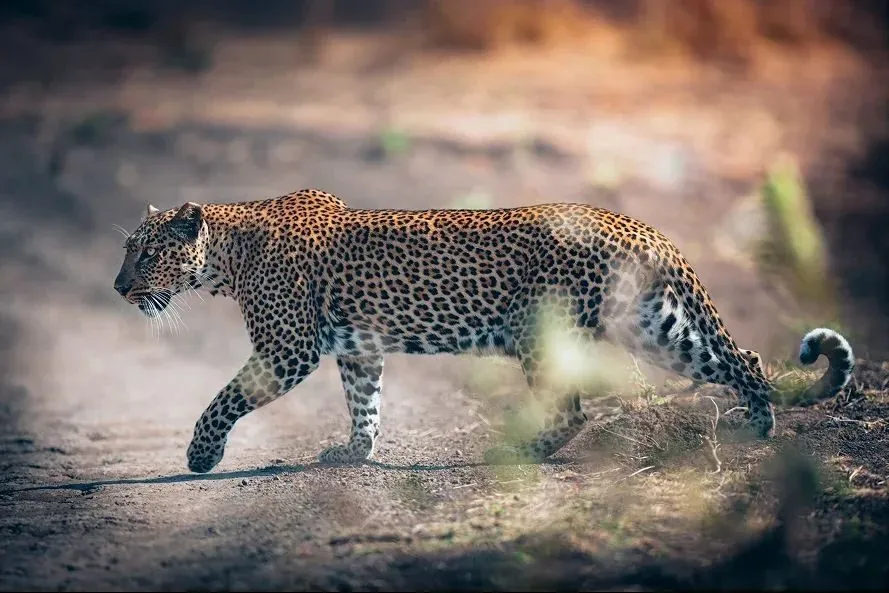
- Off-road driving, so a guide can leave the track to follow a leopard into thick bush.
- Night drives, to find nocturnal animals after dark.
- Walking, fly-camping, horseback or camel safaris, depending on the property.
Many national parks are stricter: vehicles stay on the tracks, and visitors are usually back in camp by dusk. Some parks break that pattern, and South Luangwa is the best example. It is where walking safaris began as a tourism product in the early 1960s, and its guides still lead walks and spotlit night drives inside the national park. So the rule of thumb has exceptions, and the way to know is to ask what you will actually be doing, and where.
Why the price gap exists
Rates vary widely by country, season and camp, so we will not quote a single comparison. In general, a lodge in a private conservancy costs more than a camp in a national park, often a good deal more, and the reasons are worth understanding:
- In a national park, a large share of the rate pays for park fees, a small camp and the logistics of reaching it.
- In a conservancy, the rate also pays for private anti-poaching teams, land leases or ranch costs, community payments and, often, a higher level of hospitality: plunge pools, spas and a service style closer to a resort.
- Strict bed limits mean fewer guests share the cost of running the place.
None of this is a trick. It is simply what the extra money buys, and it is not always explained to first-time travelers.
What each one does best
A conservancy suits you if you want to see a particular species (the chance of rhino is one of the strongest reasons to choose Kenya’s conservancies), want to leave the track for a photograph, want to ride or camp out, or want a high level of comfort with few other vehicles.
A national park suits you if you are after scale and the feeling of being a small guest in a place that does not need you. The pleasure there is partly in earning a sighting. In our experience, the camps are often smaller and more rustic, and the guiding more about tracking and bushcraft.
Both models matter. Private conservancies have helped bring back species such as the black rhino from land that was once cattle country, and national parks protect huge, intact ecosystems that no private estate could replicate.
Five questions to ask before you book
- Is it fenced, and how large is it? Ask for the area in square kilometers or acres.
- Who owns and manages the land, and where does your money go?
- What can I actually do? Walking, night drives, off-road driving and how many vehicles are allowed at a sighting.
- How many beds are there, not just in your camp but in the area?
- What is included in the rate? Park fees, activities, drinks, transfers and flights all change the real comparison.
If an adviser cannot answer those clearly, it is worth asking a few more questions before you book. We would rather you chose the right kind of safari at a lower price than the wrong kind at a higher one.
Sources and notes
Figures were checked against public sources in November 2026 and can change. Lewa’s size, history and fence: Wikipedia. Borana’s size, rhino reintroduction and the Lewa-Borana landscape: Save the Rhino. South Luangwa’s area: Wikipedia. Amboseli’s area and ecosystem: Wikipedia. Acreage figures are conversions from square kilometers and rounded.