Where You Walk Matters: How We Plan a Walking Safari
Not every walking safari feels the same. Vehicle traffic, where the walk starts and how remote the camp is decide the experience.
When a client tells us walking is the reason they want to go on safari, we change how we plan the whole trip. Almost every camp in South Luangwa offers a walking safari, and on paper they look alike: a licensed guide, an armed scout, a small group and a few hours on foot in the cool of the morning. On the ground they can feel completely different.
The difference is rarely the guide. It is the place. A walk is at its best when the only sounds are birds, wind and your own footsteps, and when the animals you meet have not just watched three vehicles go by. That depends on where the camp is and how many vehicles share its country.
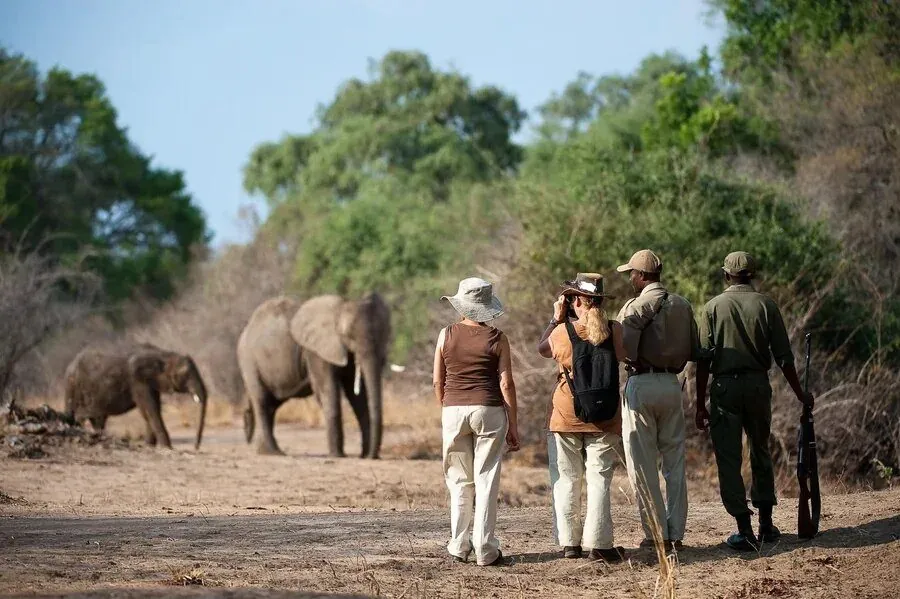
On foot with a guide and an armed scout as elephants feed ahead. Photo: The Bushcamp Company.
The three questions we ask about every camp
How much vehicle traffic is there where you will walk? This is the biggest factor. If game drives pass nearby, you will see and hear them, and the feeling of being alone in wild country is gone. Walks in quiet country, with few or no other vehicles, feel like a different activity.
Does the walk start from camp? The best walks begin on foot at first light, straight from your tent. If you have to drive to a walking area first, you lose some of the coolest, most active hours of the day, and the walk becomes an outing rather than the way you move through the country.
How remote is the camp? Distance from the busy central part of the park usually means fewer vehicles, wilder game and more freedom for your guide to choose a route.
Why it makes such a difference
The first two hours after dawn are the heart of a walking safari. The air is cool, animals are moving and tracks from the night are fresh. Every minute spent in a vehicle getting to a walking area is a minute of that window gone.
On foot you notice everything: a twig snapping, an oxpecker's alarm call, the smell of a buffalo herd before you see it. An engine in the distance changes that. It is not dangerous, and the walk is still worthwhile, but it is not the walk most people imagine when they book.
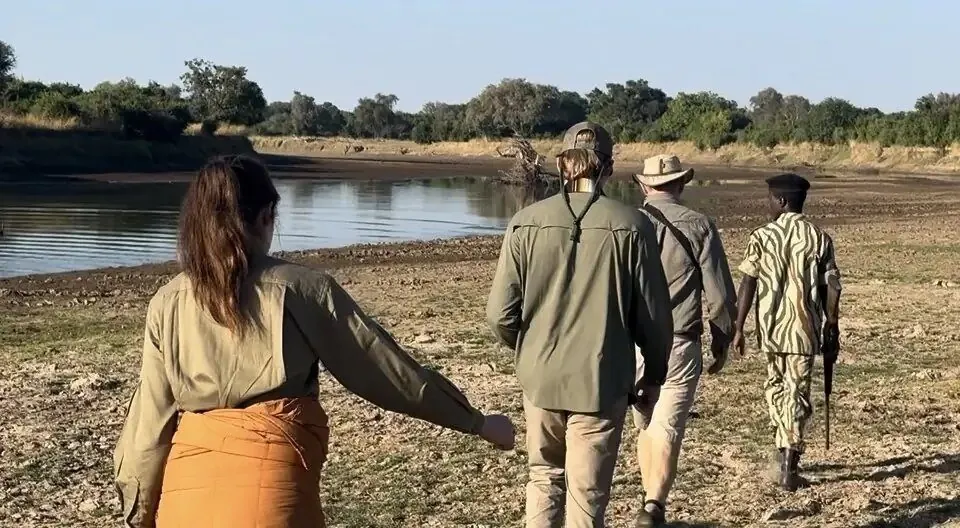
Walking the riverbank on quiet ground in the Luangwa Valley. Photo: Chibembe Wildlife Reserve.
Walking near Mfuwe
Most of South Luangwa's lodges sit near Mfuwe, around the main entrance to the park and outside its boundary. They offer excellent value, easy access and some of the best game drives in Africa, and most of them offer walks. Those walks usually take place in the busiest part of the park, often after a short drive to reach the walking area.
For a first taste of walking, or for guests who mainly want game drives, that can be exactly right. For travelers who come for the walking itself, it is worth looking further afield.
Where walking is strongest in the Luangwa
Measured by the three questions above, the strongest walking in the Luangwa Valley is found at camps that are remote, quiet and built around time on foot. Examples include:
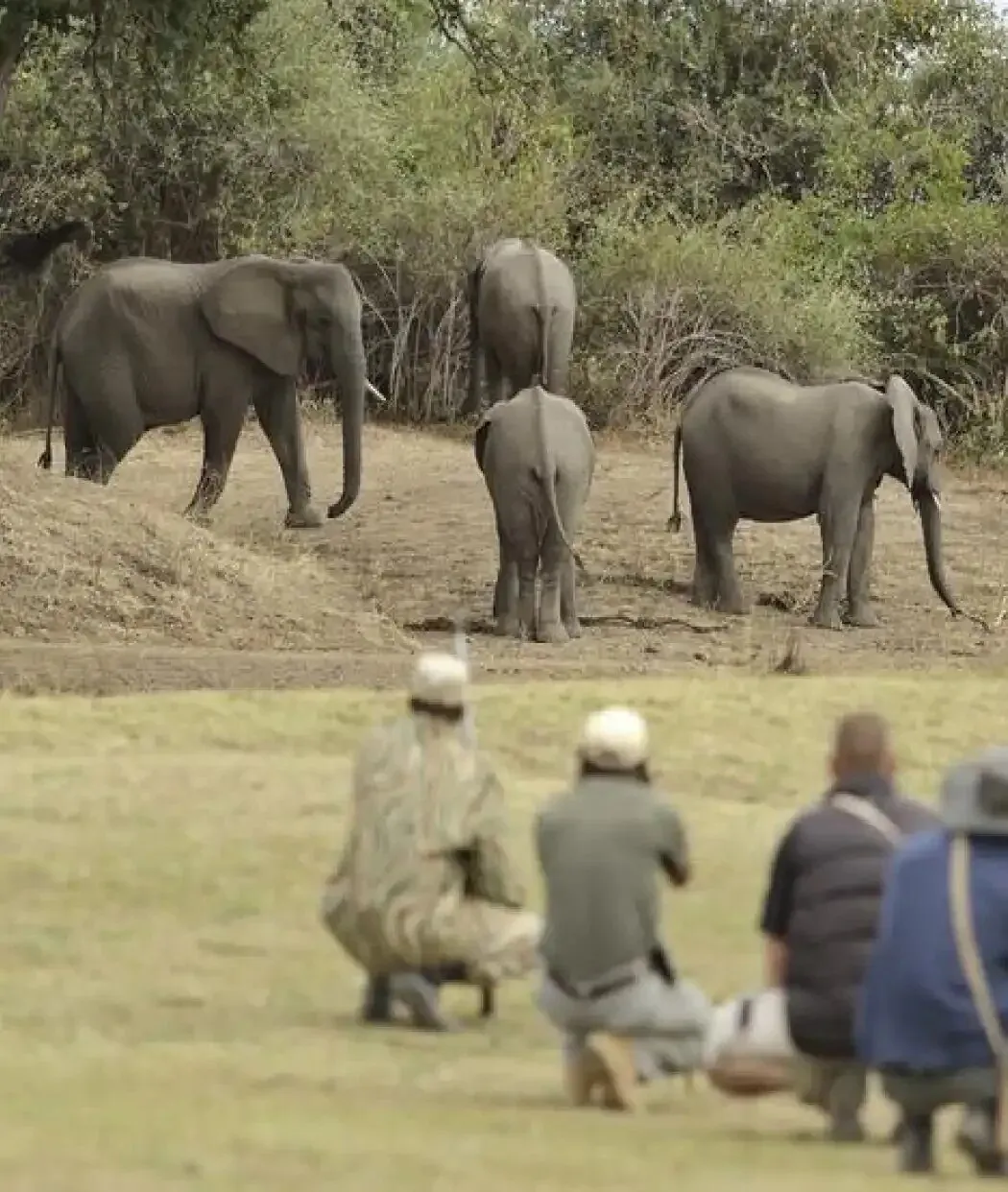
A walking party pauses to watch elephants in the remote north of the park. Photo: Lion Camp.
The southern bushcamps of The Bushcamp Company. Small camps in an exclusive area of the park, away from the central game-drive circuit. Walks start from camp, and guests can walk camp to camp between Zungulila, Kapamba, Bilimungwe and Chindeni.
Lion Camp. In the remote north of the park, where walking is offered every day as an equal choice with the game drive.
Chibembe Wildlife Reserve. A private reserve on the east bank, where Norman Carr's walking safaris began. Guests cross the river by boat to walk in the park, in country with very little vehicle traffic.
Remote Africa Safaris. Its Chikoko Trails camps are walk-in camps on the west bank, and guests can walk from one to the next.
Robin Pope Safaris. Known for its multi-day mobile walking safaris and its camps in the quieter Nsefu Sector.
Shenton Safaris. Kaingo and Mwamba lie in remote country in the north of the park, with walking a core activity.
Time + Tide's northern bushcamps. Small seasonal camps such as Luwi and Nsolo, away from the busier central area.
North Luangwa. Camps such as Mwaleshi, Takwela and Kutandala, in a park with almost no vehicle traffic, where walking is the main way to explore.
What we check for you before we book
Will we walk straight from camp, or drive to a walking area first?
How many other vehicles are likely to be in the area where we walk?
How many walks a day does the camp run, and how large are the groups?
Can we walk from one camp to the next?
Can we do a longer walk, or a full morning on foot?
The bottom line
A walking safari is only as good as the country you walk in. If walking is the reason you are going, we will steer you to a remote camp where walks start from your tent and the only engine you hear is the one that brings you home for breakfast. If you want a mix, we often pair a lodge near Mfuwe for game drives with a few nights at a remote walking camp.
Tell us how you like to travel, and we will build the walking safari around it.